
By Andrew Christie | Sierra Club
Published on January 7, 2026
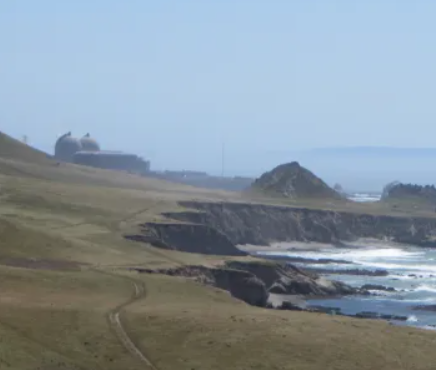
In the wee hours of Sept. 1, 2022, the California state legislature passed an “urgency statute” that reversed itself on the planned closure of Diablo Canyon Nuclear Power Plant’s two reactors, which were scheduled to shut down in 2024 and 2025. Governor Newsom, declaring that the shutdown of Diablo Canyon would trigger power blackouts like the ones that marked the summer of 2020, had picked the final hours of the legislative session to ram a bill through the State Assembly that would nullify that agreement, extending the life of the plant and handing PG&E a $1.4 billion loan to do so.
Governor Newsom had developed a habit of introducing last-minute, end-of-session bills to circumvent the legislative process and rush through large projects and significant policy changes with minimum review, debate, or public awareness. Legislators were not fond of the tactic, and they took every minute available, going several hours beyond the technical end of the 2022 legislative session to build a number of guardrails into the bill.
Among them: The plant’s life was to be extended for only five more years. The State Energy Resources Conservation and Development Commission and the Public Utilities Commission must provide the legislature with quarterly assessments and estimates for electrical supply and demand balance in 5- and 10-year periods under multiple scenarios. The California Energy Commission must present a cost comparison of the Diablo Canyon powerplant and alternatives on July 1 of each year.
Basically the legislature sought to ensure current proofs of the necessity for the power that the plant generates, and to ensure that the cost of funding its extended operation will not fall on California taxpayers.
It now appears that there is a problem both with that $1.4 billion loan to PG&E and the state’s estimates of electrical supply and demand.
On Dec. 15, under the headline reproduced above, the San Francisco Chronicle took a hard look at the process by which Diablo Canyon got its life extended and the odd discrepancies and policy shifts it involved:
● In September 2021, the California Energy Commission (CEC) issued a report on projected power levels that confirmed a “reliable system” through 2026, a year after Diablo’s planned closure.
● In 2021, 2,359 megawatts of renewable energy storage was added to the grid – ten times the amount that was available during the 2020 blackouts. Today that figure has risen to 14,000 megawatts.
● Starting in late 2021, nuclear advocates, tech bros and Sacramento lobbyists spent $2.5 million on the effort to keep Diablo open, which included bank-rolling “a study proposed by MIT researchers, who wanted to evaluate keeping Diablo Canyon operating to desalinate vast amounts of water for an often-parched state.” (That study made a splash, and impressed Governor Newsom, but it was the latest in a long line of nuclear pie-in-the-sky promises made before reality intrudes, a la the “energy too cheap to meter” promised by Reddy Kilowatt in the fifties. In the real world, extending Diablo’s desalination capacity just to serve a few south county cities would have cost an estimated $1,500 per acre-foot of water, and vastly increased levels of toxic brine discharge from the plant.)
● In February 2022, the California Public Utilities Commission reaffirmed that the state’s planned power portfolio without Diablo “meets stringent reliability standards.”
● In April 2022 “Newsom first spoke about keeping Diablo Canyon open longer than planned.”
● Then “officials from state energy agencies held a media briefing in response to inquiries from the press. They spoke of potential shortfalls of 1,700 megawatts or possibly more — a stark contrast with the rosier forecasts of a few months earlier.”
On the crucial question of how much energy needs to be produced to avoid coming up short during unexpected events, the Chronicle noted that there are “different ways state officials can define a ‘shortfall’.” To meet the goal of no more than one shortfall day every ten years, California and many other states maintain a reserve margin of power in its energy system that is 15% in excess of expected demand. Despite the fact that the CEC had reported that “in 2026, the first year when Diablo Canyon would have been fully closed, the projected reserve margin exceeded 15% every hour of summer peak demand,” and “the current analysis continues to well-exceed reliability targets through the 2020s,” the CEC issued a report concluding it would be “prudent” to keep the nuclear plant operating to achieve a 26% margin due to the possibility of a type of outage that could occur once every 14 years.
The Chronicle report found that “data from a state energy forecast last August “showed a large electricity surplus even without Diablo Canyon,” but not large enough to meet the ever-rising reserve margin.
The Chronicle story provides a context in which the findings of independent energy experts determining that there is more than sufficient production of electrical power in the state to meet current and future needs without the Diablo Canyon plant have been increasingly at odds with the reports of state agencies. In a critique of the “26% reserve margin” report, Daniel Hirsch, then president of the nuclear safety nonprofit Committee to Bridge the Gap, said “It becomes very hard to avoid the conclusion that CEC staff put a very heavy thumb on the scale to produce a result desired by the Governor.”
The story also notes that the plan for the reimbursement of the $1.4 billion loan to PG&E, supposedly to be repaid via a federal subsidy program, is now ambiguous, as “the current repayment forecast [is] just $741 million…which could leave the state hundreds of millions of dollars short.”
It is also worth noting that the California Coastal Commission just issued a permit to allow Diablo to keep operating five more years on the basis of necessity and despite the fact that the full impact of the plant’s cooling system on the marine environment is too great to be fully mitigated.
This may be the most arresting passage in the Chronicle report:
“Touting the financial benefits of Diablo Canyon operating to 2030, PG&E said in a March public statement that without the plant, ratepayers’ bills would be $3.2 billion higher. PG&E arrived at the calculation using a CPUC-determined cost number for obtaining alternate power sources to ensure reliability. However, CPUC recently revised that cost number downward by over 70% — turning $3.2 billion potential net savings into more than $500 million in net costs.”
Astute readers will recall a Nov. 13 New Times op-ed by County Supervisor Dawn Ortiz-Legg touting that erroneous $3.2 billion savings as reason to declare Diablo Canyon “a symbol of smart policy meeting economic sense.” Shortly after Supervisor Ortiz-Legg made that statement based on bad data, the board of supervisors passed a resolution supporting keeping the plant operating through 2045 and awarded a nuclear consulting firm $25,000 to produce a feasibility study on keeping the plant open and to “help identify pathways to responsibly expand nuclear technologies.”
A flurry of denials from the state agencies named in the story met the reporter’s requests for information, along with a charge of “sloppy and inaccurate reporting” from the Governor’s office, which the reporter duly included in the Chronicle story. That reporter, John Emshwiller, is senior national correspondent for The Wall Street Journal and received the Gerald Loeb Award in 2002 for his coverage of the Enron scandal. It is unlikely that there was anything wrong with his reporting.
A legislative hearing would seem to be a more appropriate response.